
Meet the Speakers
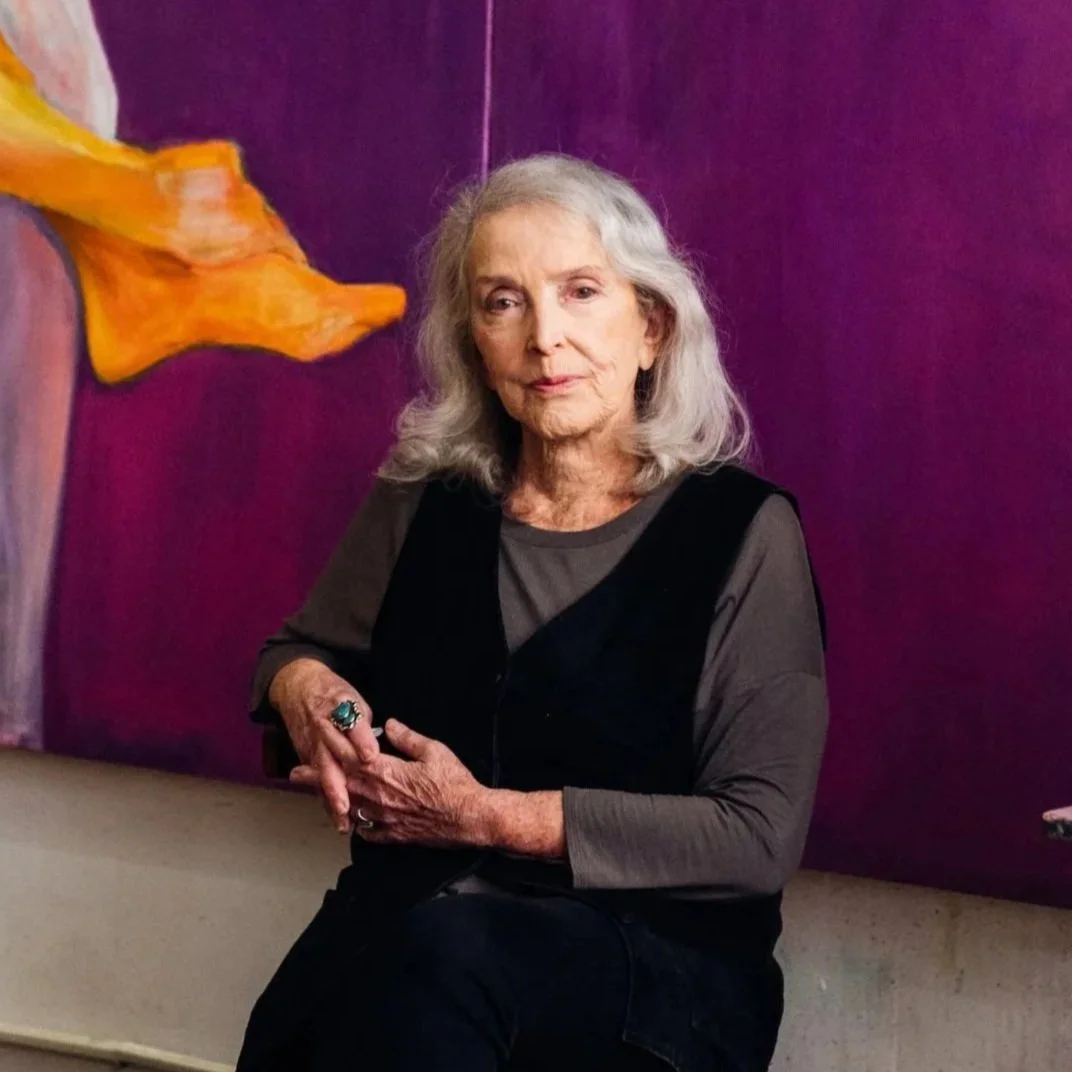
Joan Semmel
Artist
Joan Semmel (b.1932) has centered her practice around representations of the body from the female perspective. Born in the Bronx, NY, she studied at The Cooper Union, Pratt Institute, and the Art Students League of New York. Trained as an Abstract Expressionist in the 1950s, Semmel began her painting career in Spain and South America. Returning to New York in the early 1970s, she turned toward figurative painting, constructing compositions in response to censorship, popular culture, and concerns around representation. Her practice traces the transformation that women’s sexuality has seen in the last century, and emphasizes the possibility for female autonomy through the body.
In the 1970s, Semmel began exploring female sexuality with her Sex Paintings (1971) and Erotic Series (1972). In these large-scale works, Semmel employs expressive color and loose, gestural brush strokes to depict couples entwined in various intimate positions. Produced in a cultural landscape shaped by second-wave feminism, the two series celebrate female sexuality, heralding a feminist approach to painting and representation. In 1974, Semmel radically shifted her practice, adopting her own body as the focus of her paintings. With this shift, she transformed her point of view from that of an observer—a viewer outside of the canvas—to that of both an observer and subject. Using a camera to frame her body, she created a series of paintings that reflect her commitment to marrying abstraction with realism. In the 1980s, Semmel built on these works, painting dynamic scenes that featured her camera and body reflected and refracted through mirrors.
Since the late 1980s, Semmel has meditated on the aging female physique. Continuing the artist’s exploration of self-portraiture and female identity, recent canvases represent the artist’s body doubled, fragmented, and in motion. Her gestural technique and palette of intensely saturated and diluted hues often blur the distinction between representation and abstraction, occupying a liminal space in which flesh is transfigured into pure pigment. Approaching her own form as a site of self-expression, she challenges the objectification and fetishization of women’s bodies by redefining the female nude through radical imagery that celebrates the aging process—refuting centuries of art historical idealization.
Photo by Taylor Miller